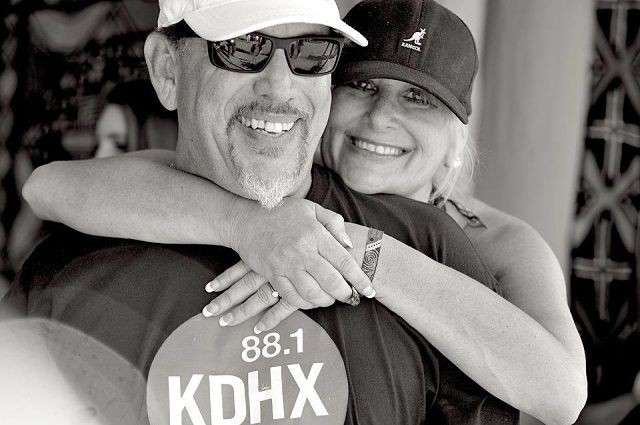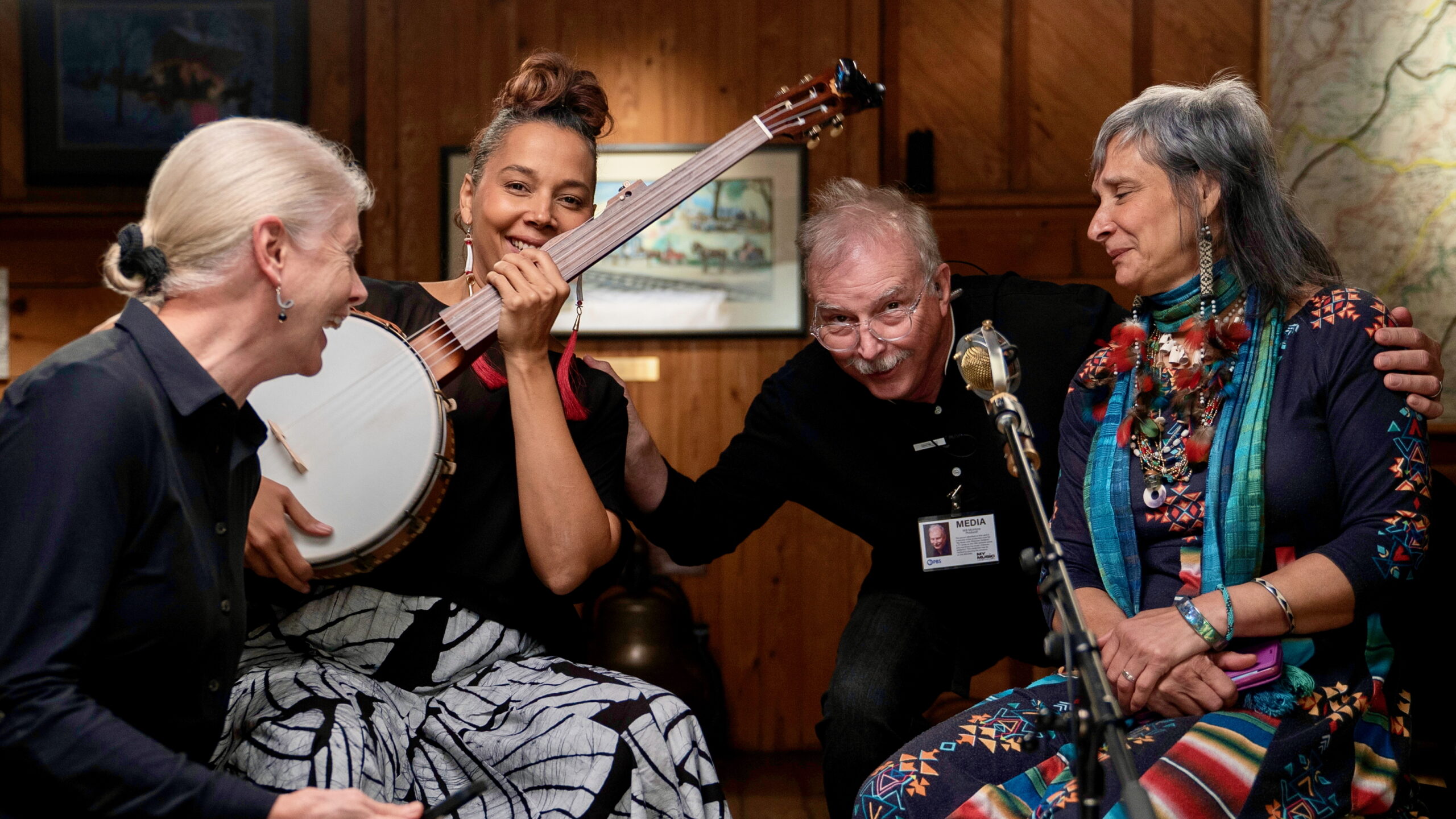

If you’ve caught our new musical spark on Friday nights, you know My Music with Rhiannon Giddens is unlike anything else on TV. But how did this sublime collaboration between a GRAMMY-winning artist and a seasoned filmmaking duo actually come to be? We sat down with the wonderfully engaging producers behind the show, the husband-and-wife team Will and Deni McIntyre, to get the inside story. From the show’s origins to their path as PBS producers, here is a lively and insightful peek into the journey of bringing My Music to the screen.
I’m excited to interview you. Meanwhile, tonight (Friday) your show will air on KLCS, so I TiVo’ed it. I’m old, I still TiVo.
Deni: I think we were early adopters of TiVo.
Will: The first TiVo we ever saw was in Los Angeles.
Deni: He says, “This has changed your life!”
That’s what I thought, “It changed my life!” so I’ll TiVo My Music tonight. Deny, Will, what was your path to TV?
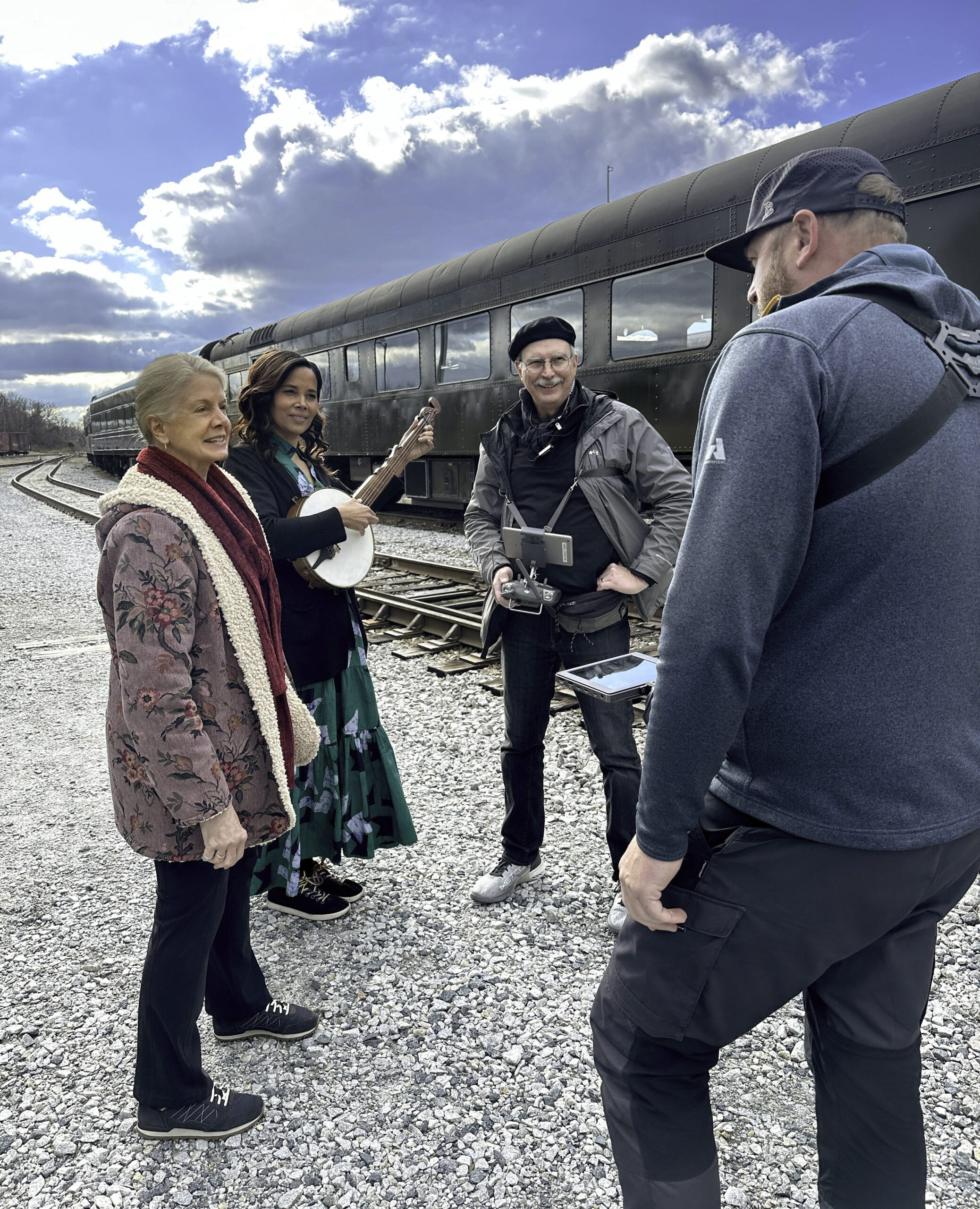
Deni: Oh Lord. We’re way older than you. We spent decades as still photographers, but always on locations. We were never advertising; we were mostly editorial. And, did a lot of work for national magazines and back in the day when corporations had printed annual reports, we would shoot the front of the book for different multinational corporations. So, we always travelled a lot; we always worked on location. After 9/11, when all the planes were grounded and nobody was going anywhere, we got our first movie camera and started to try to figure out what we were doing with that. [We] ended up shooting a lot of PSAs for nonprofits, because we were just giving them that, in case we screwed up (laughs) and needed not be paid because it wasn’t any good. We started giving work away, then we would find our feet. And that’s what happened, and we started doing the motion version of what we had always done as still photographers, which is basically documentary, not hard journalistic stuff, but featured docs. We did our first long form for PBS, when?
Will: 2009.
What was it called?
Deni: It was called Saving the Hanson House. It was the closest to home. We’ve worked in 80 countries the last time we counted, and this was the closest to home job we’d ever had; it was like a mile from our house in Winston-Salem, North Carolina. [It] was settled by Moravians, which is interesting, because right now we’re watching The America Revolution and the Moravians had leased from The Crown 100,000 acres to have their religious community and what they wanted was make their own utopia. A friend of ours was a university professor nearby in Greensboro – bought this house that was derelict and he started to try to restore it, not super fastidiously, but with the respect to the architecture and everything of the time, and we thought this a cool thing, this is what we should film.
Will: Yeah, this guy’s going to screw up, we need to film this (laughs).
Deni: He’s a funny guy and there were a lot of funny things that happened in the course of restoring this place, like interesting discoveries, and things that were over budget. So, it wasn’t like an HGTV show; it was definitely a PBS-kind of exercise. How long did we work on that?
Will: We worked on that for about a year.
Deni: A year or 18 months, and got some original musical underscores some friends of ours did. We gave it to what is now PBS NC, at the time was UNC TV. They actually ended up going to the network somehow. You did that.
Will: Yeah, NETA. And that was the last thing we did through NETA. But then our producer down at PBS NC said, “Hey, you guys are connected with the music community, you ought to do something with music.” And that’s when we called up our friend David Holt, who’d been playing with Doc Watson for 14 years, and he’d just come off the road, Doc was ready to retire. And we said, “Hey, let’s do something with the music,” and he said, “Perfect!”
Deni: Traditional music, basically acoustic, occasional forays into electric, but mainly guitar, fiddle, banjo, base, mandolin. And David is a 4-time GRAMMY winner, and had a lot of cred for touring with Doc Watson.
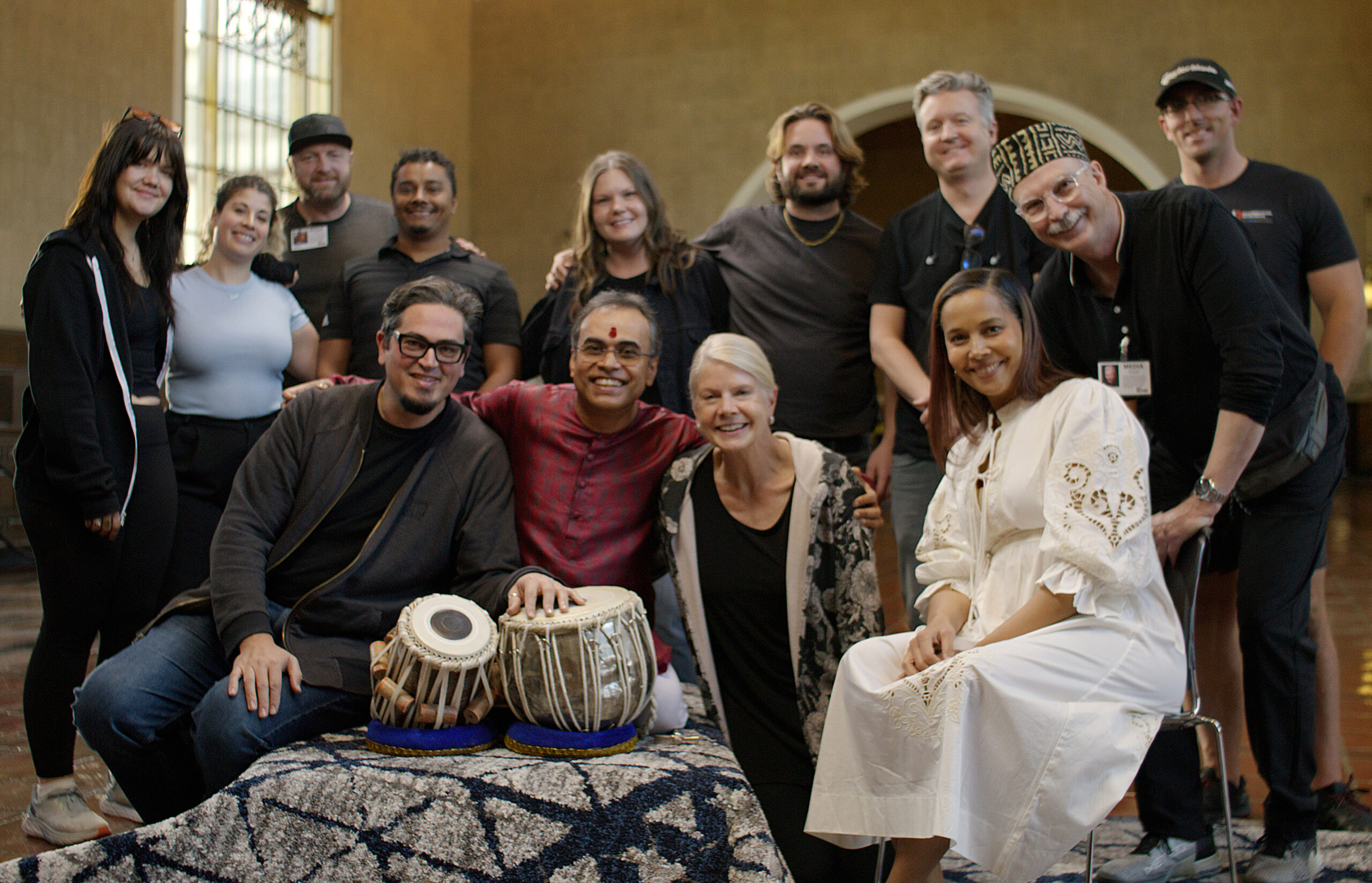
Will: So, we did six [episodes] with David, and then our first season of David Holt State of Music, Rhiannon was one of the guests. When David said he was ready to step down and retire and he got Parkinson’s Disease, we said. “Ok we need to find someone to host.” And we called up Rhiannon thinking we would get more than one person.
Deni: Rotating host, like one per episode or something. And we thought that we’d call other musicians, some of the musicians that we now knew from them having been a guest on David’s show. But Rhiannon was right up at the top.
Will: Rhiannon said. “I’ll be happy to host one episode like you’re saying, but I’d be happy to host the whole series.”
Deni: We said, “Oh boy! Now we’re going to have fun because she was a guest on David’s show in 2015 or 2016, and by the time we came to her to host, it was like 2021, and she was super busy. She had been commissioned by Spoleto (Festival USA) in Charleston to write an opera that was supposed to premiere the year that COVID happened.
So, she can really compose and play.
Deni: Her education was at Oberlin, she was classically-trained. She was headed for opera when she enrolled.
She’s a darling of the GRAMMYs, etc.
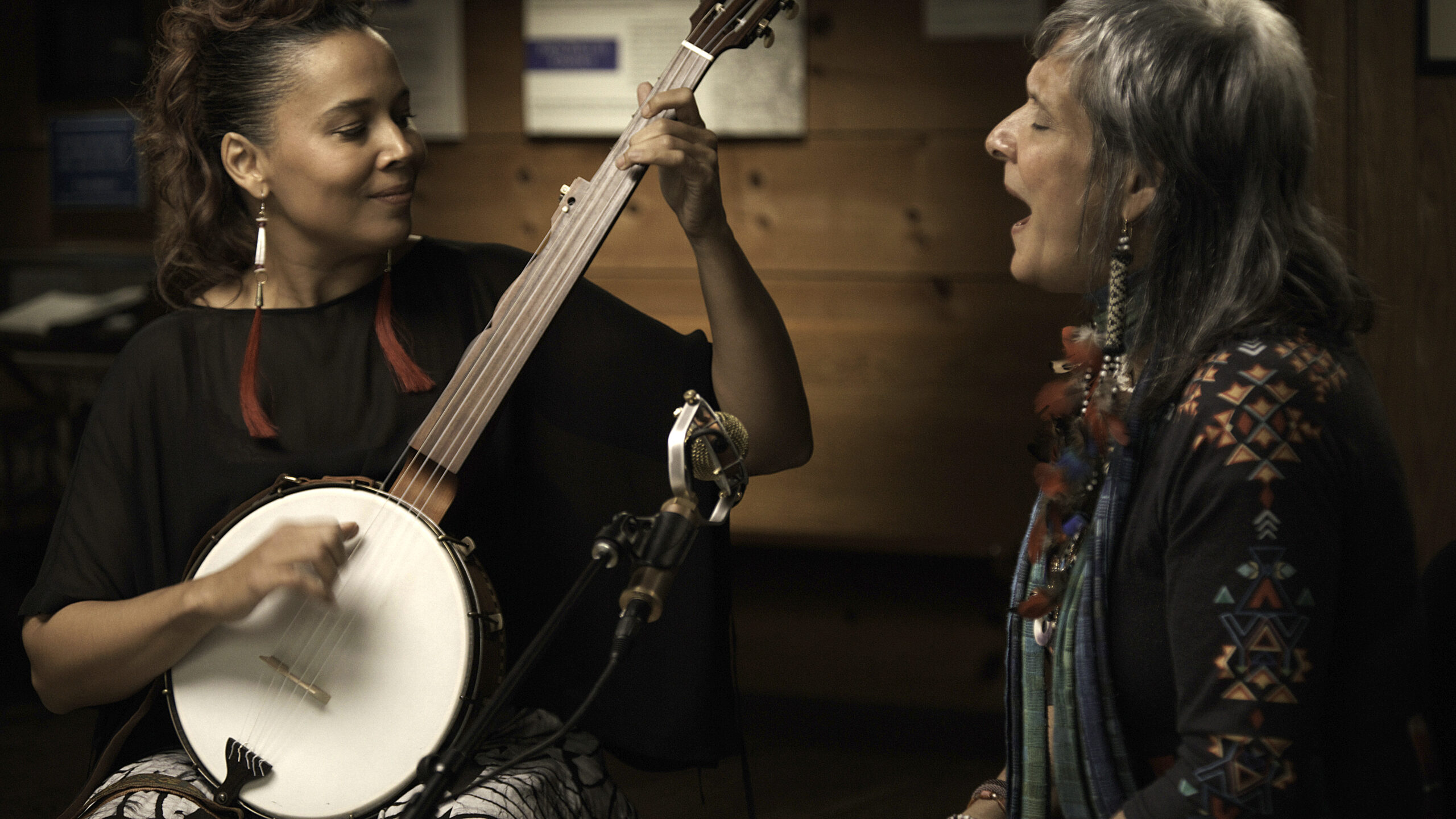
Deni: Its kind of because of all the things that she is. She crosses so many genres. That’s kind of a buzz thing right now, “ I hate genres,” but Rhiannon was first in with that. Genres are made by marketers. It’s like a niche thing. And she said like, “Reality is always messier and more interesting than that.” She’s won a Grammy; she won a Pulitzer for the opera that she composed for Spoleto.
Will: She did the libretto.
I was going to ask you “What inspired you come up with this concept as a TV show?” But you already answered that question.
Deni: We only know how to do like two things, and one of them was, we know how to do a half hour show for PBS, that’s a combination of conversation and musical performance.
Will: What’s the other one? What else can we do?
Deni: – It’s not PG, Will.
Will: Ok, yeah right.
What was your path to bringing this to PBS North Carolina, did you know them locally?
Deni: It was just, we’re life-long PBS viewers, and documentary people by inclination, and what’s what we like to watch, and that’s the kind of work that we’ve always done one way or the other. Storytellers, but not like narrative movie-type storytellers. So, the content seemed right for PBS from the beginning. And after giving it to UNC TV, somebody said, “You should take it to the network” and we did and they liked it. And then in the course of doing six seasons with David Holt, it’s not a network production, it’s not what they call NPBS, it’s PBS Plus, it’s the work that they bring in from independent producers, and in the course of doing six seasons of that kind of work, they got to trust us, so when we said, “Hey, David’s retiring, but Rhiannon Giddens is interested,” they said the same thing we said –
David was your entry point?
Deni: He was our host and actually, credit to David. David was the one who knew about Rhiannon. He said, “We have to talk to this woman, she’s amazing and she’s interested in reclaiming string band music from the 19th and early 20th centuries; right up our alley.
Funding always seems to be an issue for a PBS show; some shows can’t do a season two. How did you find funding to do this?
Will: So, that’s my job (laughs) and I had to laugh when you said funding is always a problem. It is always an issue. We’ve been very fortunate; we’ve had several funders who have stepped up. The first one to come on board with David’s show was the Ray Bigelow Foundation, and they have helped us all the way through to the first season of Rhiannon’s series. We’ve had a lot support here locally, because we’re in the middle of the Blue Ridge Mountains.
Deni: This is such a traditional hot bed for traditional music. That’s one of the selling points to this area, it attracts a lot of people to this area.
Will: So, we’ve had a lot of support locally from the Community Foundation of Henderson County, North Carolina. They have supported us through every single season we’ve done. They’ve given us a tremendous amount of support.
Deni: It’s well-funded for the size area that this is, but it is a community foundation, so the support we’ve had for this national project, it’s not like building playgrounds for local churches or schools, it’s broader than community foundations sometimes get.
That brings me to the question, I also noticed you are credited as the Will and Deni Foundation. Most are people form production companies; does that mean there’s a charitable component to your foundation?
Deni: We’re a 501c3
Will: Our role model was a guy named Ken Burns. He’s done some things. We looked at what he did in [producing] public television work, and we just decided that rather than go out and look for fiscal sponsorship, we were going to make our own foundation and be very transparent about what we were going to do with the money. And for us that’s been easier than going and looking for fiscal sponsorship.
Deni: As a 501c3, there are some rules that you have to clear.
What does that mean? What’s the charitable component?
Will: Doing content for PBS.
Deni: Everything we do. It’s all the PSAs, we’ve done work for animal shelters, food banks, land conservation. But you can be a 501c3 without doing cancer research. You have to state the mission of your organization, if that clears the rules, then you’re good to go.
Will: And when you talk about funding, most of the 501c3’s that start-up never make it to the 10-year mark, and we were founded in 2009, so we’ve been going for a pretty long time; we’re really proud of that.
Deni: You have to do the things; you have to have an annual meeting and file the forms.
Will: We have a board.
Season Two, that was the season where Rhiannon collaborated with Silk Road, so the whole season was that topic. Did she join the band and then you decided that would be the whole season?
It’s funny, because the title of the series, My Music with Rhiannon Giddens, we were going to do it like “My Music with Molly Tuttle, My Music with Jerry Douglas…” My Music with Rhiannon Giddens turned out to be the perfect title because Rhiannon is involved in so many different kinds of projects that we said, “Ok, we’re just going to catch on to the tail of this comet, and ride it.” The only way that we could get on her calendar was to do whatever she was doing right then. So, the first year we did kind of the mentors; we got some North Carolina people and several women of color that she was really cementing relationships with and wanted to lift up as a sort of impresario. But then, Yo-Yo Ma had founded Silk Road, and by the 20-teens, he felt like, I guess, he had done everything he could do with them and he left and they approached Rhiannon be artistic director. She is the sitting artistic director of Silk Road, so she’s had that going before we even started the series. But they had been working on commissioned music for American Railroad for a couple of years, and they were getting ready to take the whole show on the road right when we were going, “Ok, are we going to do a Season Two and if we are, how are we going to be on your calendar, what are you doing?” And we decided that the way to do a Season Two was to go basically on tour with Silk Road American Railroad campaign, and feature some of the musicians who had contributed a bunch of music to that series. So, that’s how virtually all the musicians in Season Two are members of Silk Road, or Silk Road guest artists. Season Three is Ireland – we did it all in Ireland last fall.
On many PBS shows that air on various day-parts, that are not prime time, I notice several shows are husband-wife duos, like yours. Have you noticed that? And is that, I assume, because these shows are a labor of love?
Deni: Yeah, I think they are. We’re in North Carolina and we don’t really know that many other people who are doing what we’re doing. There’s one guy Paul Bonesteel in Ashevile who does amazing work. And not being in prime time, we are in some places, it just depends. And being a music show, we’ve actually had more of a leg up than some very deserving other kinds of shows, because what happens is programmers will put us like on the shoulder of Austin City Limits, or something like that. So instead of being at 2:30 a.m. we’ll be at 9:30 p.m. before or after Austin City Limits.
Well, tonight you’re on – KLCS has an entire Friday night music line-up. What’s a typical day for you like?
Will: Hahaha! Wow! I don’t know that we have a typical day!
Deni: it’s been a long time since we had a typical day. Just as we were getting ready to go to Ireland to film Season Three, we are in the mountains of Western North Carolina and we had this thing called Hurricane Helene that hit last September days before we were due to leave and we had a landslide that came within 18 inches of our foundation.
I have PTSD when it rains.
Deni: Everybody in Western North Carolina has PTSD now when it rains really hard. People go, “Uh oh, I hope it stops soon!” We spent the better part of this year just repairing from the hurricane. We did make it to Ireland, we had to go down to Raleigh, catch a plane, get out to Dublin. When we left, we didn’t have electricity or water or cell service here in our house.
– Interview by Kari Young.
KLCS Public Media members can stream full seasons of My Music with Rhiannon Giddens, anytime, on KLCS|Passport
For more information, visit the show’s official website.
You can follow the show on social media: Instagram, or YouTube.