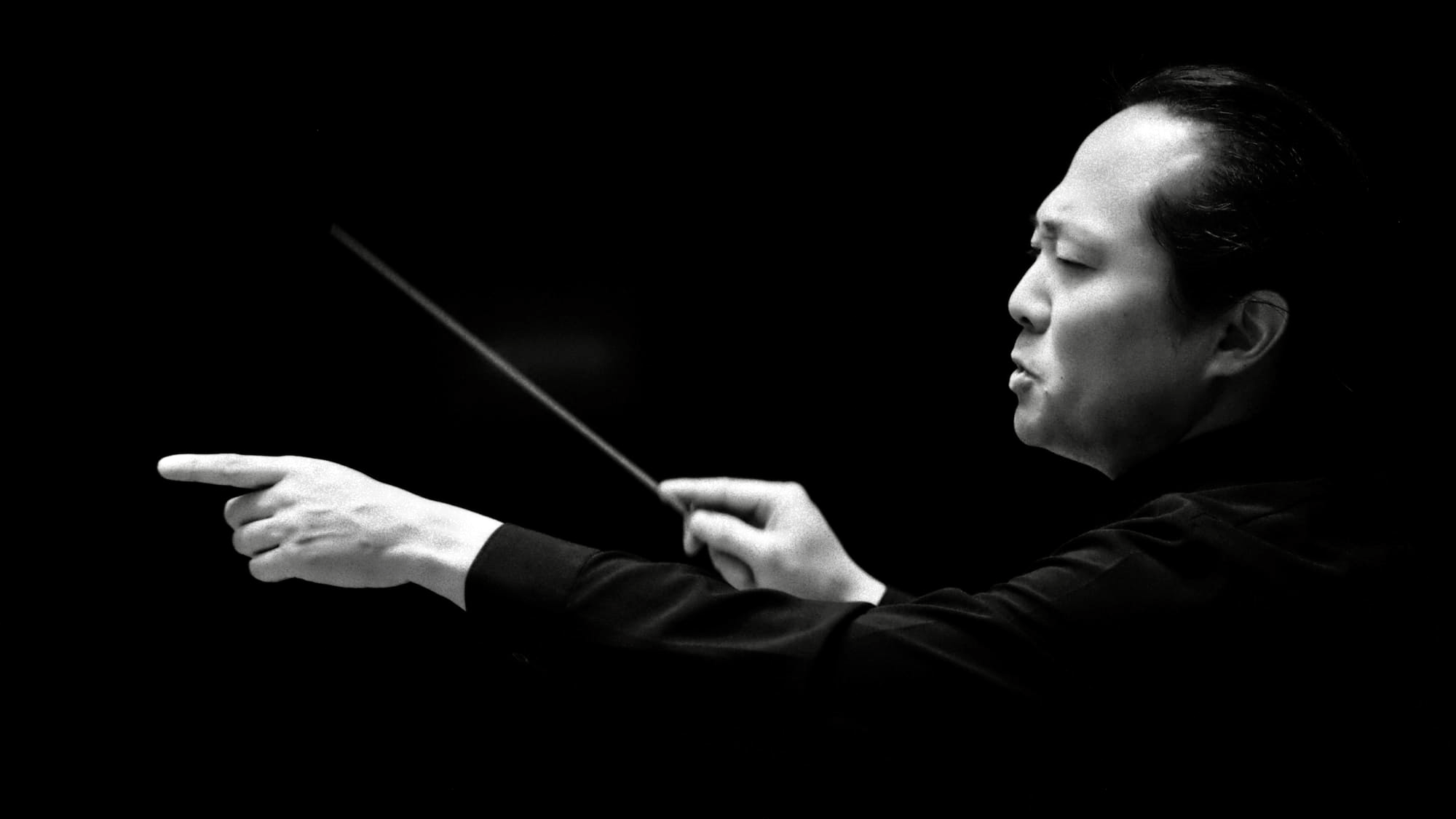

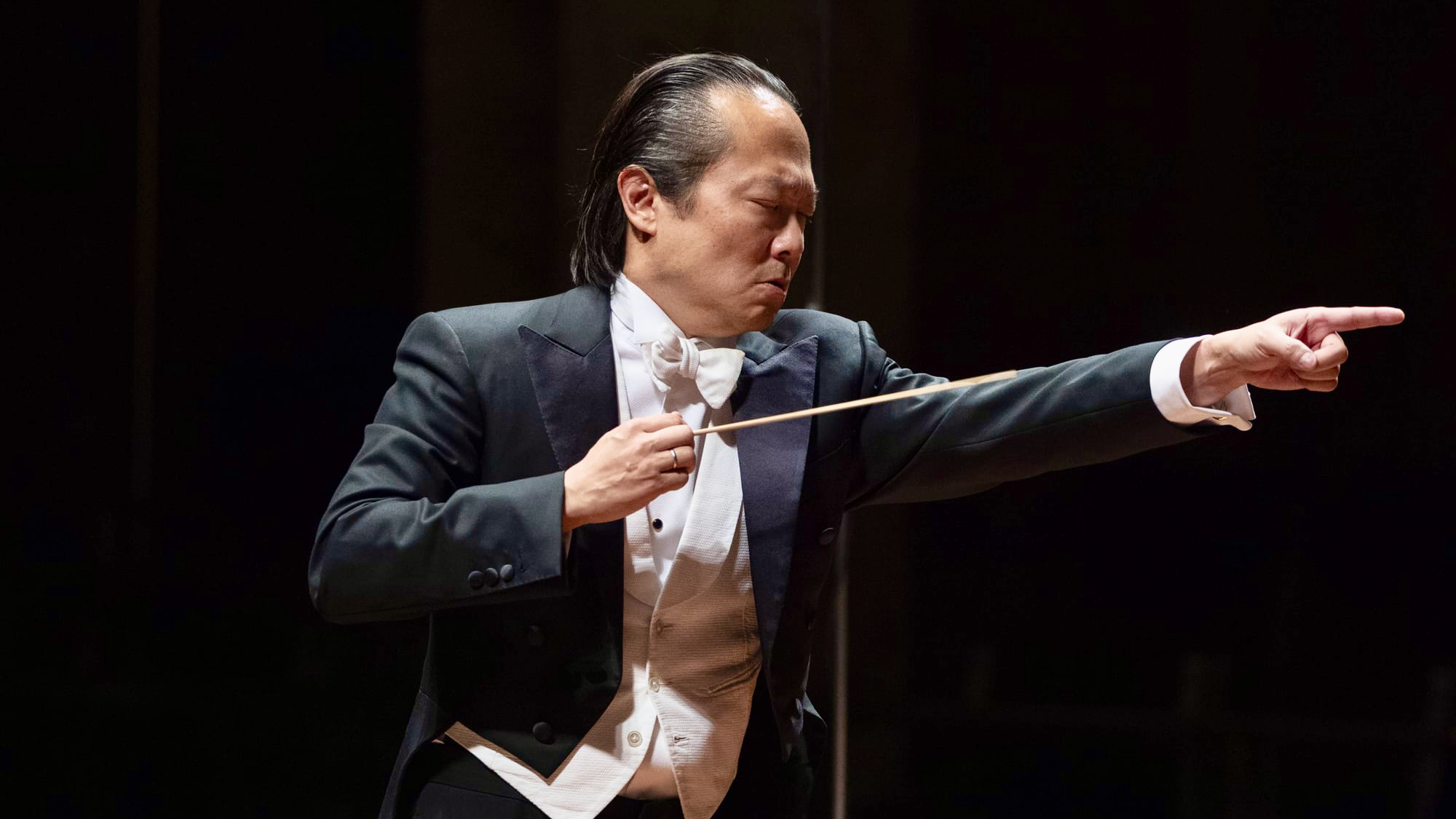
As the first—and still only—Asian-American male host on PBS primetime, Yoo isn’t your typical maestro. Sure, he’s the conductor of the Mexico City Philharmonic and music director of Festival Mozaic, but on his Great Performances series Now Hear This, he does something no other classical music show on American network television has attempted: he turns Bach into a bucket-list adventure. Think Anthony Bourdain, but with a bow tie and a fugue. Carrying his violin across continents, Yoo becomes our pied piper—not just to distant cities, but to the very rooms, churches, and cobblestones where the great composers once stood. It’s travel, yes. But also, time travel.
In this candid conversation, Yoo opens up about making PBS history as an Asian-American host in primetime, and how Now Hear This—a one-of-a-kind show in the world’s largest media market—went from improbable idea to appointment viewing.
Scott, you are the only Asian male host of a PBS show in primetime and the first Asian-American PBS host (as I recall, David Suzuki many years ago was Canadian). People have sometimes thought of PBS as an exclusive “ivory tower,” so it is refreshing to see that image slowly changing. Does that fact ever enter your mind as you host the show?
SY: I didn’t know I was the only one.
I interviewed (director) Danny Lee, who’s behind the scenes on PBS and I said to him “Scott is the only Asian male host,”; I think you’re the first Asian American male host on PBS.
SY: I don’t know, maybe. When I was 3 or 4 years old, I used to play – it’s a march (hums a tune) It was the theme of Masterpiece Theater and the reason I could do it was because my parents had PBS on all the time. The lineup was always Sesame Street, and then Mister Rogers, and then Electric Company. They were back-to-back-to-back. My parents would leave it on and we would watch Great Performances Live from Lincoln Center. We would watch those shows. That was very much a part of growing up, just as much as Warner Brothers cartoons was a part of growing up. Without any exaggeration, I feel very surprised and honored to be part of that long continuum of PBS programming. People are often surprised when they find out how many people watch PBS. Because, what happens is that a ton of people watch Home and Garden Television, say, but it is very fragmented, it’s only people who like gardening, or home renovations who will watch that network. PBS still gets a huge chunk of audience because a lot of people just default to it.
Do you ever let yourself get impressed by this experience? Knowing that you’re the host of this show and that you are now part of this legacy; that you get to educate people through this format?
SY: I really do and I don’t take it for granted at all. The people who are my bosses at WNET they have been the greatest, most supportive bosses that you could have. They’re really such cheerleaders and they’re so encouraging. They just want what’s best for the show, what’s best for WNET, what’s best for PBS. I understand why they’ve been one of the flagship PBS forces for so long. They just do things very well there. They’re one of the standard bearers. It’s really WNET and WGBH. And I think for culture, I think definitely it’s WNET, and once you meet these people you kind of understand why.
I love this show. How did Now Hear This and your role in the show come about?
SY: I was doing a concert in Austin, Texas. At my music festival in California, Festival Mozaic, we have a series of events we call Notable Encounters, which is kind of a museum docent’s guide to whatever we’re playing that night – whether it’s Brahms or Beethoven or Bach, or whatever. That particular occasion, we were playing the three Brahms piano trios. Brahms wrote three piano trios and what’s odd is they’re spread out over his life. One he wrote at the beginning and that he re-wrote at the very end of his life, and so you can kind of trace his life journey through these three pieces. It went very well, and a few months later we decided to bring it to Austin, where one of my best friends Bion Tsang, he’s a wonderful cellist, he teaches there.
He’s in your episodes a lot.
SY: Yeah, you’re familiar with the show. So Bion teaches at UT Austin, and he said, “Let’s do this there.” So, we did it. The irony was that, at the event where I was talking about the Brahms piano trios – only like seven people came to the event and it took a week or two weeks to prepare for that and then seven people came, four of whom were my college friend who taught at UT Austin, and her family. And then a couple of other people. So, I was crestfallen. Also, when you do these, it’s really much better if you do them for a large audience because you feed off their energy. If they laugh, it gets you motivated, it’s not dissimilar to doing a standup routine. Anyway, the next day we had the actual concert and many people came, it was great. And somebody came backstage and said, “Hey, very nice concert.” And I said, “Thank you.” And then he said, I’ll never forget it, “But I really liked what you did yesterday.” And he was a very tall man and I didn’t place him I didn’t recognize him, “Did I see you in the audience? I don’t recognize you.” He said, “I’m Harry Lynch and I’m a producer for PBS and I think we need to make a television show together.” And I just thought that was kind of a joke, or just something nice to say and not serious. So, I didn’t really make much of it, and then I completely forgot about it. I didn’t try to get his name or try to get his card or phone number. I said, “Hey, nice to meet you.” And then a few weeks later I was at my job in Mexico City and he called me, and he said, “Do you remember me? This is Harry Lynch, we met at your concert. And that was I believe in May of 2016, so a few months later. And exactly one year later we were filming the pilot. Then, a year after that, we were in Crystal City, Washington D.C. meeting with PBS people; a few minutes after that, they said “Make a second episode.” And then a year after that, we were suddenly part of Great Performances. It went really fast. It just kind of happened very quickly, it was really cool.
I especially love the episodes tracing classical musicians like the Bach – that one, and some of the older ones you can’t find on PBS|Passport now, but these take us back in time. Do you have favorites?
SY: Oh, that’s really sweet of you. We’re going to try to get those back on Passport. It’s a common complaint ‘ve heard, is that, “Hey, I want to see this one again, where is it?”
The Bach one is one of my favorites.
The Bach one you can’t find, that’s one that’s not on Passport currently.
SY: And I must say that it really was a favorite, because the music is so fantastic, and we had so many amazing people guest-star on that show. And the reason that is very, very high praise, is that for most of that episode, I had a high fever.
Oh!
SY: And, I actually had laryngitis. They actually stuck a fiber optic tube down my nose. Some German doctors [came] to see what was the matter with me, and I actually saw my own vocal cords bleeding. I was just shivering most of that episode, but despite that, I still look back on that fondly because it was amazing experience to walk where Bach had walked.
You knew Lynn Chang from Harvard days, it was nice to see you thank Yo-Yo many years later. Was the “Old Friends” episode your idea?
SY: That’s an interesting one. Lynne, I’ve known forever. And we were very close when I went to college. I mean, really, really close. I talked to him once or twice a week. Really, really nice guy. Yo-Yo, I didn’t know very well. During college he just called me out of the blue and said, “Hey, I hear that you’re having a little bit of a low moment, thinking about being a musician or not. You might need a sounding board.” It was just completely generous; he’s Yo-Yo Ma, calling this college student.
He was huge then.
SY: He was already huge. But so sweet. So the three of them made a trio. Richard Kogan, I did not know until I started making this show. Of course, I’ve known who he was for 35 years. But Harry, the producer, said, “Hey, for this segment on Schuman I want to actually hire this man who is both a pianist and he’s also a psychiatrist.” I said, “You’re not talking about Richard Kogan, are you?” He said, “Yes.” I said, “Oh my God, you got him? That’s terrific.” That’s how that went. The Old Friends – we were doing an episode on young stars; you’re not supposed to say “child prodigy” anymore. And then we were doing something on mid-career – like people who were virtuosos. And we were talking specifically about Paganini. So, to finish off that season, we thought, “We should probably do something late career; a valedictory episode. And we were thinking maybe we could talk to Herbert Blomstedt. He’s 93 and still going strong; we could talk to him for an hour. But then the idea came about to have Yo-Yo and Lynn and Richard come together and look back on their lives. And I was really happy about that, and also, I’ve always wanted Lynn to be on the show, because he was such an important part of my college life and my early career. He was so supportive.
The episode where you tried to compose music was interesting.
SY: Oh, that was brutal, that was brutal.
It showed how difficult it is to have that gift, of composing. What ever happened, did you premiere it?
SY: I did.
I loved the first movement you showed, it was very dreamy.
SY: Thank you. It did premiere. Being Asian, you know you’re taught, you just sit there and work hard, it’s going to happen, here’s the thing – when you compose, and sometimes I would sit down in front of the piano with some paper in front of me for 10 hours and you’d get nothing. Nothing would come out. There’d be nothing on the page that was usable. It’s not discouraging; you’re scared. It’s just scary. It pulls hope out of you. It’s so scary.
Did you learn if you have to have the gift, or, that anyone can do it?
SY: I learned that, I did it. I did finish the piece; it is of uneven quality. I would say it’s all well written. Is it a great piece? I would say “No.” Is it a good piece, I would say maybe. What I would say is that anyone who composes electively either has to do it because it’s music that has to get out of them, or they have just tremendous courage. And I just salute those people. I’m not one of them. I don’t think there will be an Opus 2, I think Opus 1 is it, but I salute those people because that is so hard, it’s so difficult.
PBS is one of the only places where classical music takes center stage, and in such a large market like the United State, we are the only ones. I wonder—do you think about how important a show like yours really is? There is no other show like this for classical music in America right now, especially in primetime.
SY: I’ll say this, the director Harry Lynch, who’s the EP [Executive Producer], he and I and just do this thing together. We often talk about: are we moving the needle? And what I mean by that is that Anthony Bourdain really moved the needle for art cuisine in the U.S. If you think about it, I live here in Columbia, Missouri, in the middle of the middle of the U.S. And even here, there are plenty of farm-to-table restaurants and there is a boutique this and boutique that. I place a lot of that at Anthony Bourdain’s feet. You and I are similar age, so you remember those times where your parents had people over and they asked, “Hey, what is your son doing?” And they’d say, “Oh, he’s a cook.” And saying “He’s a cook” was not a point of pride. That was something to be ashamed of. And now it’s the opposite, “Oh, yes, my son is working at this restaurant.” Now, it’s the opposite, it’s a glamorous thing to say that you work at a restaurant. And I hope, my one hope is, that we can somehow move the needle as to the perception of what classical music is.
Yes, yes!
SY: My worst memory as a musician citizen, was in high school, they had a McDonald’s commercial. The camera was outside, the camera was looking inside a house, it’s raining and there’s little Asian kid, and he’s playing the violin very badly. The voiceover says, “Having a bad day?” Then, “Come to McDonald’s!” I didn’t really appreciate it because that little boy doesn’t appear in the McDonald’s restaurant. What bothered me was the fact that playing the violin was equated with having the worst possible day. Playing the violin, inside on a rainy day was like the lowest of the low. And I don’t think people realize how corrosive that is to the art form. I hope that somehow Now Hear This can change the direction of that river.
You brought Anthony as a catalyst, and in a way, you are too – for classical music. You are!
SY: I guess so. We need to be bigger than we are in order to move the needle.
You are not a producer on the how, but you know music. Do you guide the episodes and create the outline of what you want to show and discover?
SY: How our work flow goes is that around now, Harry and I discuss what episodes are going to be made for the following season. And then, it really depends. Sometimes, I just show up and other times we are going through in very great detail like, “Can you play this?” or “Can you do that?” or “What do you think about having this guy?” It really depends episode to episode. My favorite episode from last season was an episode about Barrios, who was, for me an unknown Paraguayan guitar composer. He only wrote for the guitar.
I have no reason to know who this person is. And literally, all I did for that was I stepped on a plane for Paraguay. And then I was told, ok, this is what we need to do for this scene. I didn’t even play in the episode. So, it really depends episode to episode. One of the great things about Harry is that he’s a very collaborative person. He’s very generous that way, so if there is an idea, he’s always up for it. He’s the opposite of somebody who’s controlling or proprietary. He’s a very laidback, smart guy. And it’s amazing, one of the things I’m so impressed with him is that by the time we film the episode, no matter how well I know the composer, he knows them better than I do. I think he reads extremely quickly and he just reads so much.
Is he a musician?
SY: He’s an amateur flamenco guitarist and he’s an amateur flamenco guitar maker.
Flamenco guitar is not easy!
SY: No, it’s very difficult, and making the instrument is very difficult and they have nothing to do with each other, but he’s the kind of guy who’s good at everything he does. And he has a very, very strong memory. I have a very strong memory, but his is arguably better than mine. He just remembers facts, dates; he just has command over the material. So when we did the Bach episode, I knew a lot about Bach’s life; I spent a lot of time studying Bach.
The Boccherini episode – I thought how lucky you are, with a friend or two you can easily be a blessing on the street at any time and create music. I hope that is something you think about and something that you do? Like randomly, like if you’re just waiting for the plane?
SY: When we first decided to make this show, Harry Lynch told me “I want you to watch this documentary on PBS called Uranium.” It’s only two episodes. It’s really good, I think he took notes on that show and we talked about it afterwards. It was kind of homework and he said, “Ok, you watched it.” I said, “Yes, I watched it.” He said, “What did you notice?” “A guy was carrying Geiger counter around everywhere.” And he said, “Exactly.” And I said, “Yeah?” He said, “Well, the Geiger counter is your violin.”
Oh – interesting.
SY: He said, “I know you’re a conductor now and you use a baton more than you use your violin these days, but you’re going to have the violin with you because when we go to Italy, you see Vivaldi’s manuscripts, I want you to be able to play off them just by looking at them.
How much time do you travel the world doing this show?
SY: We just came back yesterday from Istanbul. We got back at 10 at night, so that shoot was 10 days. And the one in Iceland was 12 days. The one we did on Joplin was nine days, and I think the one for Brahms was 10 days. So, it’s 40 days a year more or less.
Is this the new season you’re talking about, Joplin, Brahms?
SY: Yes, and we’re doing an episode on Icelandic music, not really on a composer, and then we did an episode on Turkish music. Not necessarily on a composer.
As music director in Saint Luis Obispo, and conductor in Mexico City, and a violinist – which of the three do you do that you like best?
SY: I’ve got to say, I definitely like what I’m doing at the moment. And what I mean by that is, so I’m the music director of the Mexico City Philharmonic, and I conduct them. When I’m doing that, I just like doing that. And I don’t even quite frankly remember that the TV show is going on. And I think it kind of has to be that way, because if you’re thinking about something else when you’re doing that, you’re kind of sunk. When I’m at my festival in California, I’m both conducting and playing and that’s an ideal life to be doing that. It’s also a bunch of my friends. Most of those people are friends, and they’re just wonderful people. That feels like utopia for me and there is no TV show when I’m doing that, and there is no Mexico City. And last week, until yesterday, I was with the crew and we were shooting TV. And when I’m doing that, I don’t remember that there’s a Mexico City Philharmonic, I don’t remember my festival. That’s kind of how it has to be, because otherwise if you’re thinking about your other job when you’re doing Now Hear This, it doesn’t really work.
Yeah, I can see that.
SY: The only exception is that we shot three episodes at my festival in California. And that is really trippy because it feels really strange to be hosting and also be doing the festival at the same time. It’s just bizarre.
My favorite episodes were the ones travelling through time with classical musicians and retracing their roots.
SY: I agree.
It’s like an easy travelogue, but we don’t get to see that. People don’t really go to a Vienna, or whatever.
SY: That’s right, that’s right.
– Interview by Kari Young
Great Performance – Now Hear This, Season 7, airs Mondays at 9 PM, beginning May 21s, on KLCS Public Media. Check our schedule for full details.
KLCS members can stream the new season and back episodes of Now Hear This anytime, on KLCS|Passport, visit watch.klcs.org for more information.
You can also visit the show’s official website or follow Scott Yoo on social media: Instagram or Facebook .