
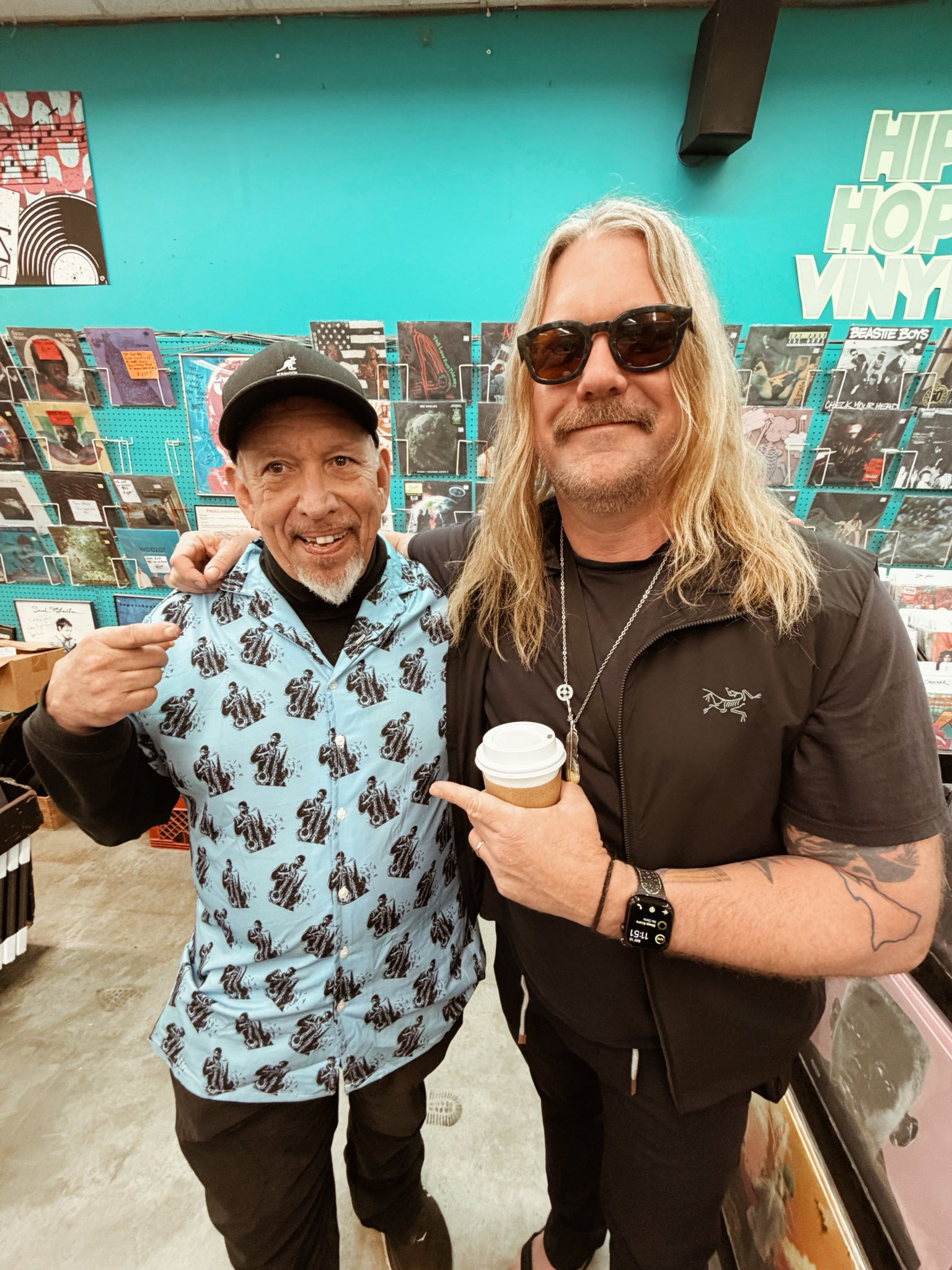
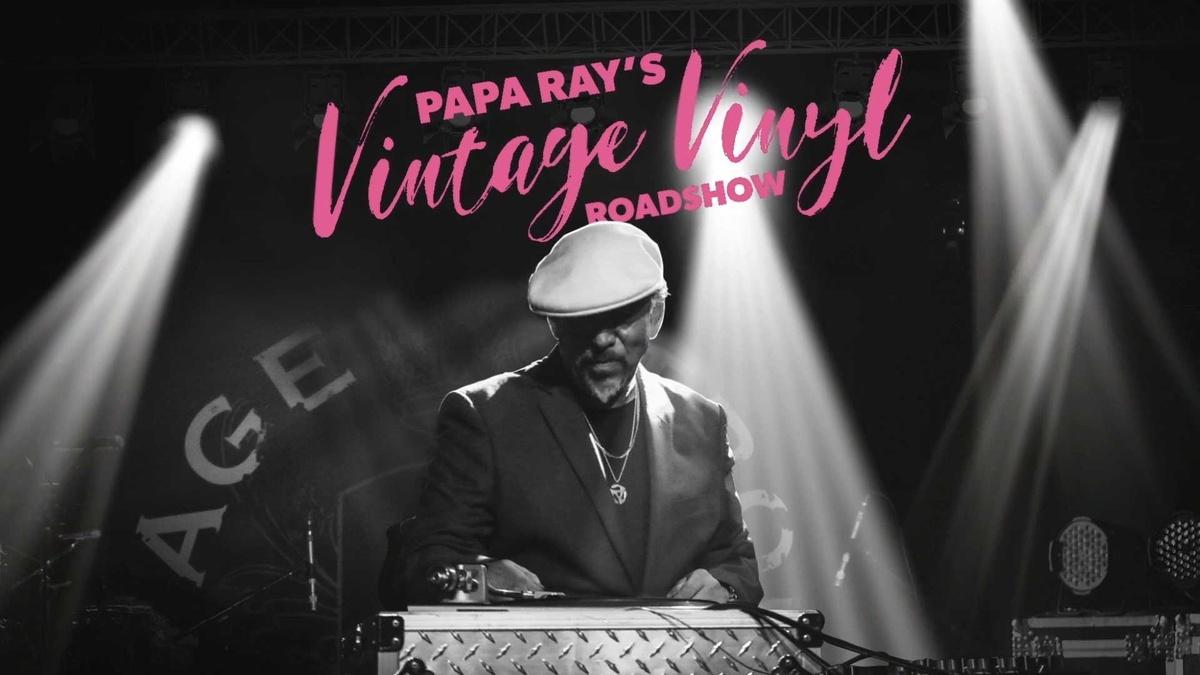
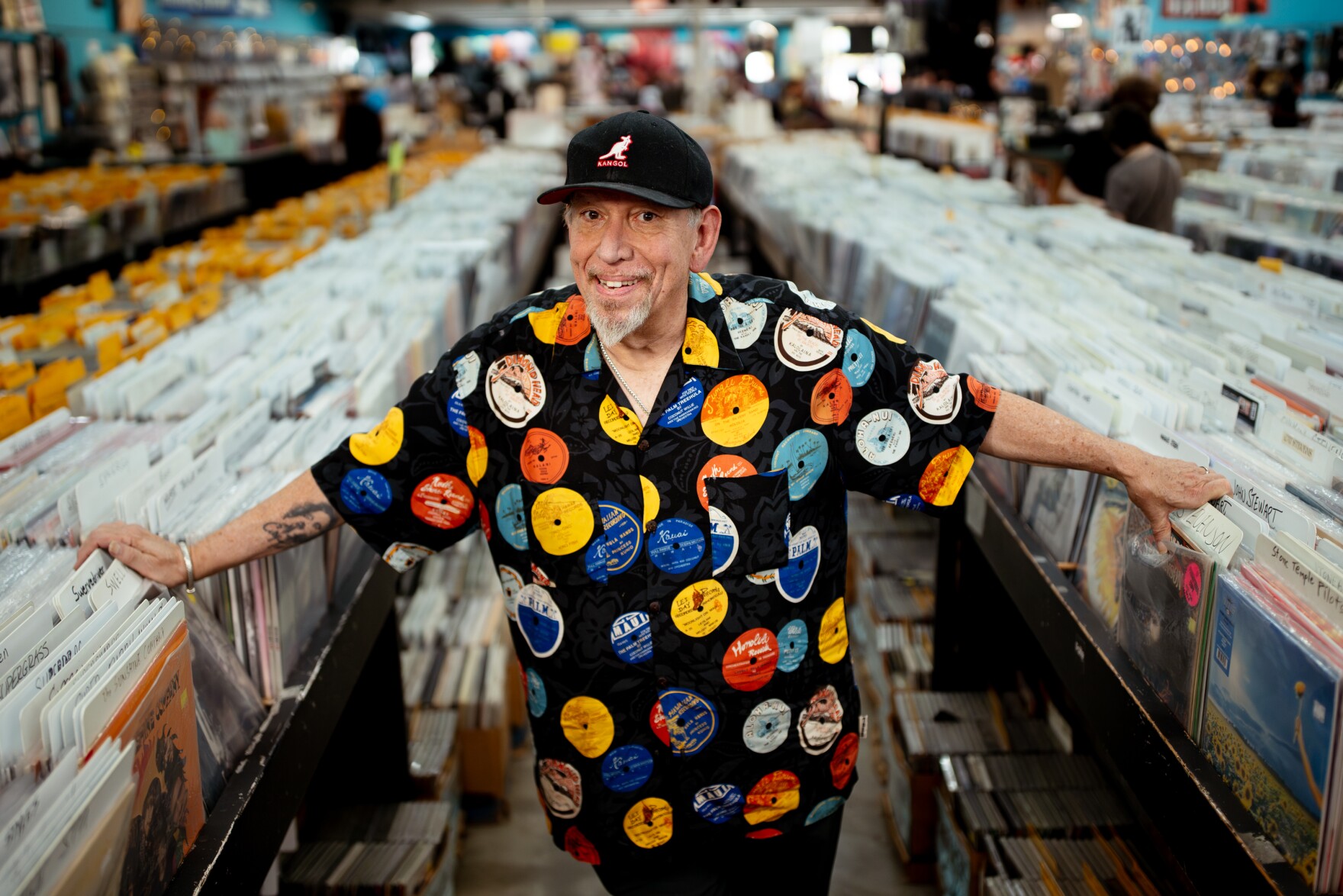
The man who built St. Louis’ legendary Vintage Vinyl store doesn’t just sell records—he hunts them. Tom Ray—better known as Papa Ray—has spent three seasons crisscrossing the globe for Papa Ray’s Vintage Vinyl Roadshow, airing Fridays on KLCS’ music block. He steps into local record shops from Tokyo to Tulsa, not to flip vinyl, but to sit down with the owners and diggers who keep the physical format breathing. Now heading into Season Three, Ray sat down with KLCS to talk about how a niche public television show about crate-digging became an unexpected cult favorite—and why the world still needs the crackle of a needle drop. Here’s what he told us.
Tom, you use Tom “Papa” Ray as your name, do you want to share the backstory?
TR: Sure, 1983 I was DJ-ing a party for a group of Jamaican expatriates who lived in St. Louis, and I was playing a new 12 inch and somebody from the back of the room yelled out, “Make that one again, Papa Ray!” And I said, “Hmm, I can use that!”
Is that your DJ name?
TR: I’ve been on radio in St. Louis for about 37 years. I do a Monday drive show on a terrestrial radio station here from four to seven on Mondays, I’m on WSIE radio. Smooth jazz, soul, and with my show it’s a what I call a contemporary blues show.
I know smooth jazz got a bad rap, but I do miss it as a radio genre.
TR: Smooth jazz and the person running the station still liked the show I was doing on a now defunct radio station. He called me up and asked me if I would continue doing it. I think it’s penetrated, because about three or four times in the last 30 years, I’ve been stopped by cops for speeding, but they recognized my voice and things were cool.
What was the genesis of the idea that became a television show?
TR: My wife – this show wouldn’t have been on the air without her input. We wanted to do what I call a love letter to our city of St. Louis. We are one of the great musical-foundation cities in the world. And it seemed to me that too many people in St. Louis, have what I call “cultural amnesia.” Not realizing that people all over this planet, when you say the term “St. Louis Blues,” they don’t mean a hockey team. And Miles Davis, Chuck Berry, have all come through St. Louis, and St. Louis was actually a center for blues recording in many ways more than Chicago was at one point. That changed after World War II.
I notice many shows on PBS are husband-wife duos, like yours. Have you noticed that? I assume that it’s because it’s a labor of love.
TR: I think it’s because so many husbands need help. Or as my wife candidly put it, “You’re the brand, I’m the brains.”
What was your path to bringing Papa Ray’s Vintage Vinyl Roadshow to PBS?
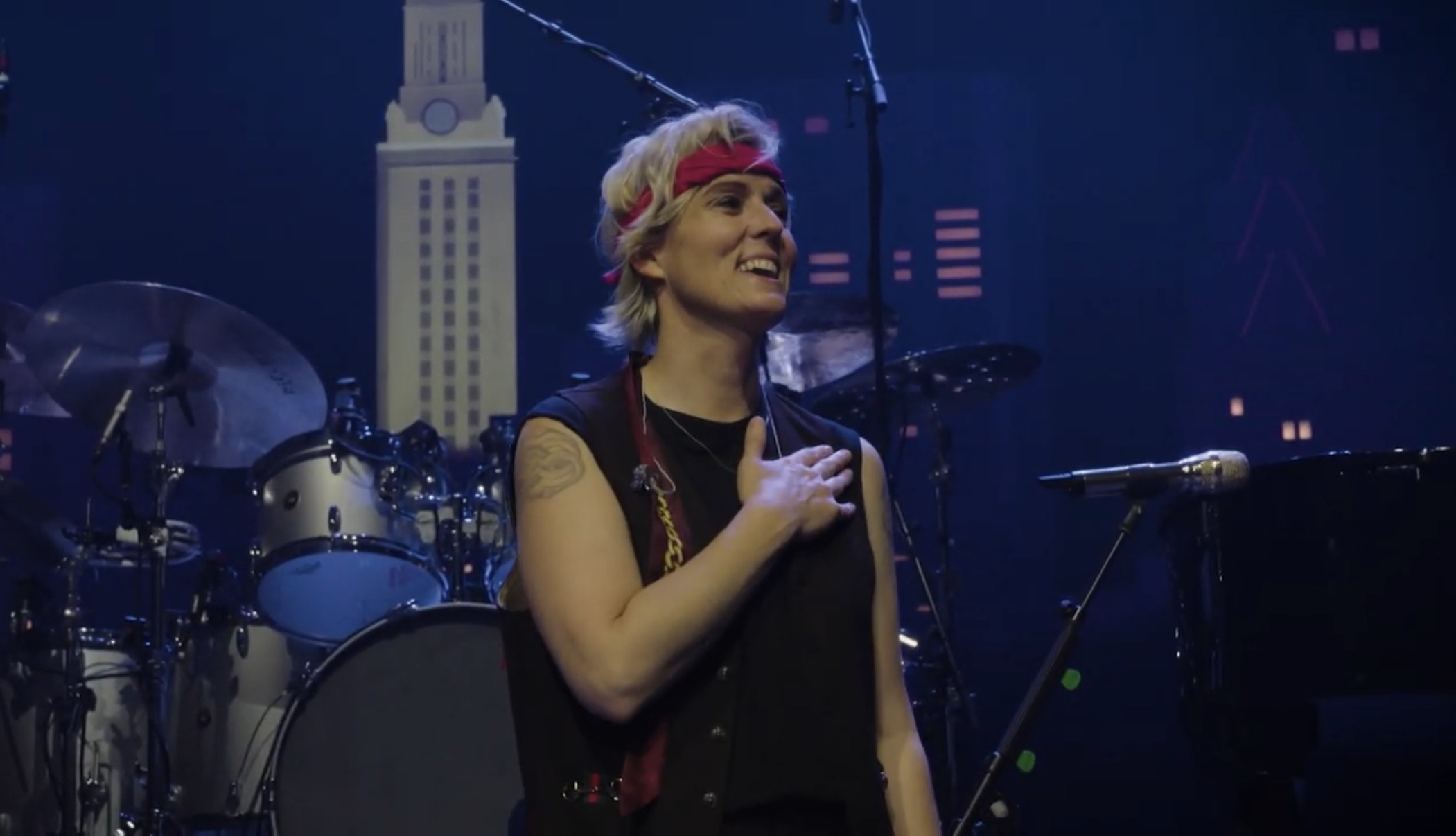
TR: We presented it to NETA and the individual we sent it to immediately wrote back. That turned out to be the pilot, which was entirely focused on St. Louis, she was so taken with it, her and her husband, they said they would be interest indeed in having it as a series. So far, we’ve gone everywhere from London, Brixton to Seattle, to Austin, to Rochester, New York. And the whole intent is to basically talk about how independent record stores are a crucial part of the musical community and culture where they’re located. Now, if you wanted to go to some place, where you didn’t know a soul, but you wanted to find out about the music scene there, you’re not going to go to a big box retailer. You’re going to either listen to the community radio station, or go to the local independent record store, and all will be revealed.
Did you cold-email someone at NETA?
TR: It’s one of the associated companies with PBS, and our presenting station is indeed our local PBS station. I sent it to one of the two most influential programmers on PBS, a gentleman named Bill Young in Dallas, who by the way was responsible for Monty Python being brought to the United States for the first time. And I had just about given up on the idea of even doing show; we had done the one on St. Louis, I was proud of it and he wrote back and said, “You know Tom, I’ve got to watch a lot of damn British mysteries, and I’ve got to watch a lot of TV cooking shows, I’ve never seen anything like your program, it makes me want to come to St. Louis.”
So he hooked you up.
TR: He encouraged us, and he ran the initial first episode about St Louis on KERA in Dallas, and we stayed in contact and things occurred.
Funding is regularly an issue for a PBS show. You travel to highlight record stores in cities across country and around the world. How did you secure funding to do this?
TR: First off, PBS as we know, loves quality programming, but as Ken Burns said – they don’t have any money. The first show – my wife and I did it on a financial shoestring, but when we were told that a season would be shown on PBS, we were fortunate enough to have the Missouri Film Commission underwrite the show, and that’s been a great help. And right now we are being shown in 9 of the 10 major markets for PBS. We just got added to New Orleans, I’m told the PBS stations in Manhattan have presented episodes from our two seasons about 157 times.
Is your wife a camera operator?
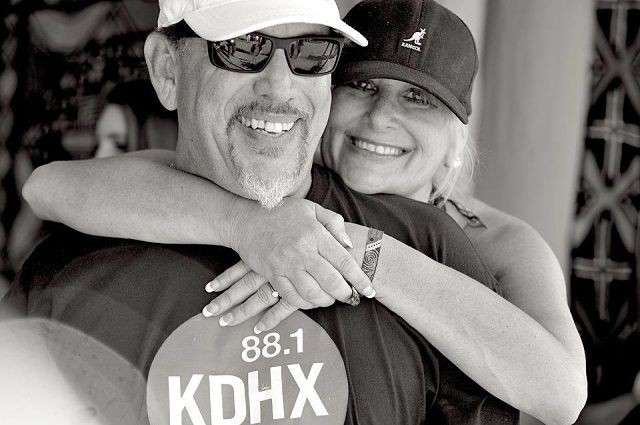
TR: I can’t be as a good as she is, she’s a very sincere, sweet woman and she also has the gift of being able to sell aluminum siding to folks with brick houses, so she’s been very, very effective in contacting people, lining things up. And we go on the road together with our camera crew.
You ask everyone – what was your first album, cassette, CD or download. I love how enthusiastic the people are sharing that. More so than some of the record store owners, who seem shy on camera. What was your first album you bought?
TR: My mother bought it for me because I was behaving on a family trip in Charleston, South Carolina. I’m from the deep south. And my very first record was on the Atlantic label, and it was called “Atlantic Gold Soul Volume Two,” [it featured] people such as Wilson Picket, James Brown, Otis Redding. I was an enormous fan of those as a young teenager.
In some scenes, the record store is packed with people. I assume they are hosting an event?
TR: That’s been the case sometimes. What you’ve often seen is us filming during Record Store Day.
Do you own a record store?
TR: Only 46 years.
So, you do radio, and have a record store.
TR: And, I’m a devout musician. I’m a musician and vocalist here in the St. Louis community, it’s what I do. I play harmonica for about 55 years. I play, of course, blues, but also jazz and soul and have always considered the harmonica the instrument closest to the human voice.
So, that’s your instrument.
TR: That, and serving as a vocalist here in St. Louis. Honestly, if I can be a convincing performer in St. Louis in the blues field, when I’ve played in Hollywood or London, I didn’t have any stage fright.
Do you have a band that you’re gigging with regularly?
TR: I don’t right now, in part because I’m pretty busy, however, as in many places, and I’m sure this is the case in L.A., if you’re tied into the music community, a lot of times you may not be an official member of the band but if you walk in, somebody on the band stand’s going to say, “Oh, we’ve got Papa Ray here, let’s see if he can sing a song.”
Do you compose?
TR: I’ve written a couple songs, but nothing major. There’s a universe of music to interpret.
What season of Papa Ray’s Vintage Vinyl Roadshow are you producing currently?
TR: The second season began Oct. 4 (2025) and as of last week, we shot the first episode for the third season, in Rochester, New York, which is home to some pretty impressive record stores.
We have Amoeba Records, which moved from an iconic location on Sunset to Hollywood Blvd, and I’ve been to the one in Berkeley. Do you have a favorite record shop in L.A.? – In the country?
TR: I like the Record Parlour. When I go to Amoeba, the employees don’t seem that happy. But the Record Parlour I think is a wonderful independent store, nice people. I’ve been to the Amoeba in Berkeley, in San Francisco, the other stores that I like – Antone’s in Austin, Texas, Criminal Records in Atlanta, Sister Ray in Soho London, Pure Vinyl in Brixton, London. There’re so many incredibly good stores in the UK, where vinyl culture was never ever denied. In 1991, I had a local newsman come into the store, set up his camera, look at the camera and go, “Death of the LP? We’ll have details at 6 p.m.” And, I said, “Well, a lot of people have turntables, CDs are great, I just don’t think they’ll sell as many. “ Strike me dead. In 2014 on Record Store Day, this time it’s a 20-something blonde, looking at the camera surrounded by people buying records, going, “Death of the CD? We’ll have details tonight at 6 p.m.! And I said the same thing, “There’s a lot of people my age that own turntables, but they’re not going to go out and buy another one. CDs are very convenient, I just don’t think they’ll sell as many, but they won’t die.” And think of it this way as far as CDs – an enormous amount of music was recorded in the 1990’s, and that music was very seldom if ever, was released on vinyl, which means quite an immense amount of music will only be avail on CD, because it’s financially impossible to put out every indie rock band that emerged in the 1990’s on vinyl.
Back in the day, we had cassettes, everyone had them, and then CDs and when iTunes came out, I thought that was it! I gave away all my CDs. Now, everyone listens to music a different way. For Christmas, say, you can’t just go out and buy a record or CD for someone, because you don’t know how they listen to music anymore. So that, to me, is sad.
TR: Well, of course if you have a retail record store, there’s this wonderful thing called “gift certificates,” and what I find interesting is, there are a lot people, especially under the age of 30 these days who want to have the physical connection. I remember one time on a radio commercial saying – “downloads is sort of like phone sex, why lose your control?”
It seems to me, that you believe that record stores will obviously be around. Do you see your show as a way to help them stay relevant?
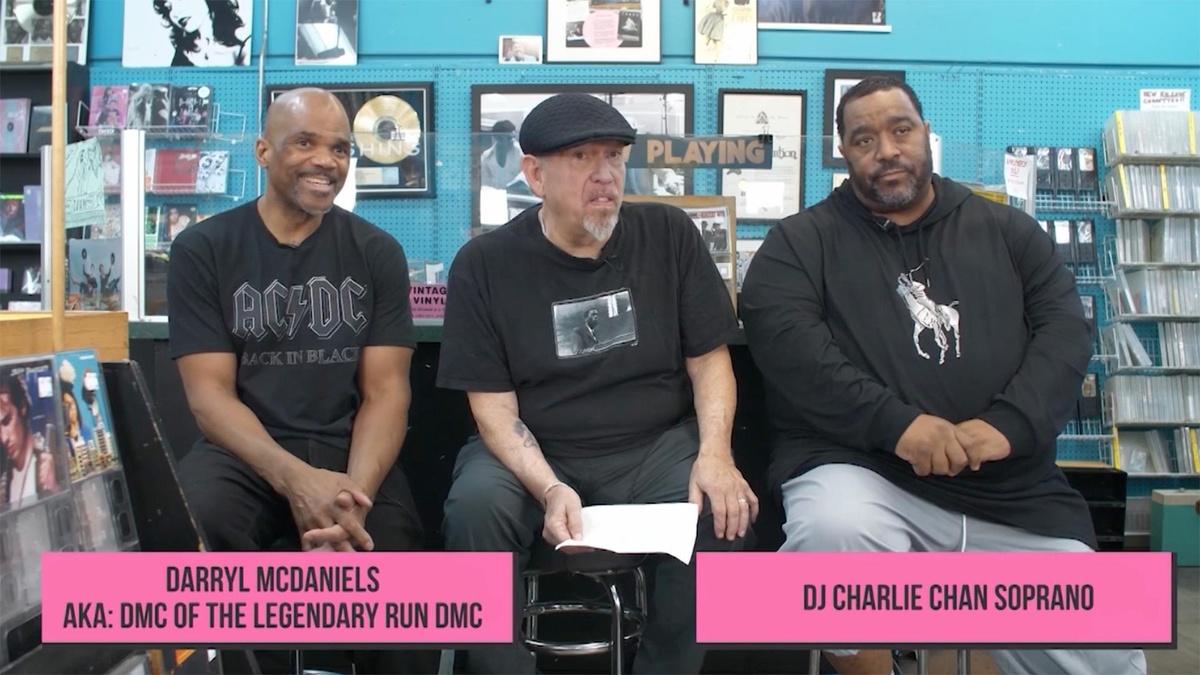
TR: One of the sub themes is the revival of vinyl. And you can see that all over the United States, as well as in Europe. Our final episode for the second season is called “Crate Diggers and Hip Hop” and that show begins with the statement that hip hop could not had occurred in the late ‘70’s or ‘80’s without the sonic of medium of vinyl. And I just so happened to have gotten an interview in our store with Darryl McDaniels, who is DMC of Run-DMC, and when I said that, his immediate reply was, “If it wasn’t on vinyl, it just wasn’t fun.”
He came to your store?
TR: He had played a show – 2,500 seat, what I would call an AARP hip hop show – Run DMC, the Sugarhill Gang. And by the way – the very first time a hip hop record was played on a commercial radio station on the planet, was at WGUN in East St. Louis in 1979, true story. In 1987-1988, I put out a 12 inch on a young man in St. Louis who was a turntablist. When Grandmaster Jay was murdered in 2010, the person I had recorded as a teenager became their travelling DJ on stage, and his DJ name is Charlie Chan soprano. The three of us were doing the interview, and it was a lovely, lovely thing, and Mr. McDaniels was a delightful human.
Anything you’d like to add that I haven’t asked?
TR: There’s a lot of things on this planet that divide people – politics, race, financial business, religion, etc. One of the very few things that will bring together, if only for a moment, is music. Music is the healing force. And that is the first line on my store’s employee handbook. By the by, I very much enjoyed when I did a set at the El Rey Theater in 2015. The last time my wife and I were in L.A. in 2023, was to see the band that opened for Vintage Trouble, appearing at the Troubadour.
– KLCS-exclusive Interview by Kari Young
[This interview has been edited for clarity.]
Papa Ray’s Vintage Vinyl Roadshow airs Friday evenings at 7 on KLCS. Check our schedule online for current listings. KLCS Public Media members can stream all three seasons of Papa Ray’s Vintage Vinyl Roadshow, anytime, on KLCS|Passport.
For updates and the latest on Tom Ray and Papa Ray’s Vintage Vinyl Roadshow, visit their website.